
Written by: Siti Sufiyyatun Binte Mohamad Sani
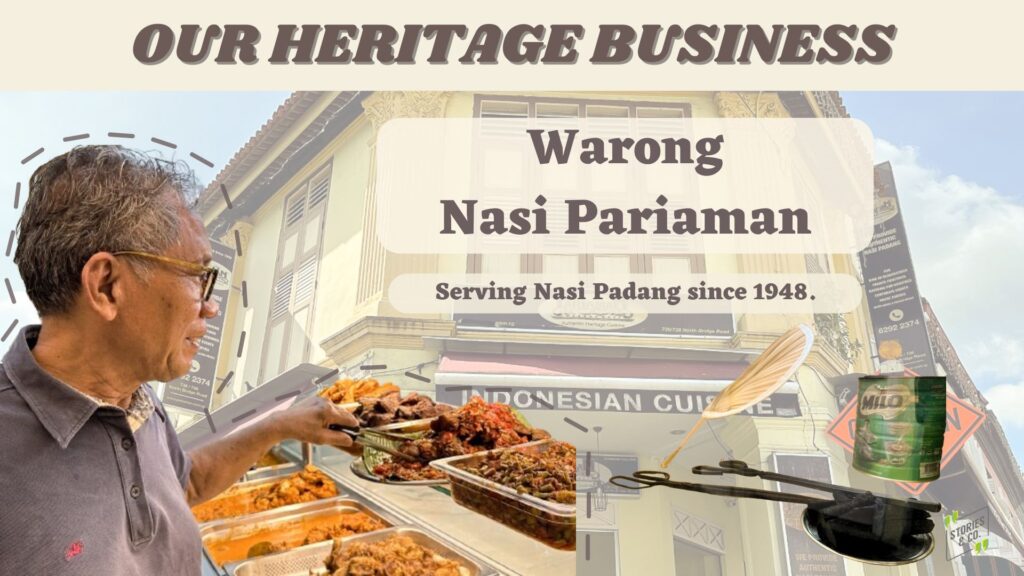
As early as 4 a.m., the clinking of pans and ladles, the chopping of ingredients and the sizzling of sauteed spices can be heard from the 7-decade-old kitchen located along Kandahar Street to dish out authentic Minangkabau dishes for its customers by 10 a.m. Entering the stall, customers are welcomed by the smoky scent of the delectable food, tickling their taste buds.
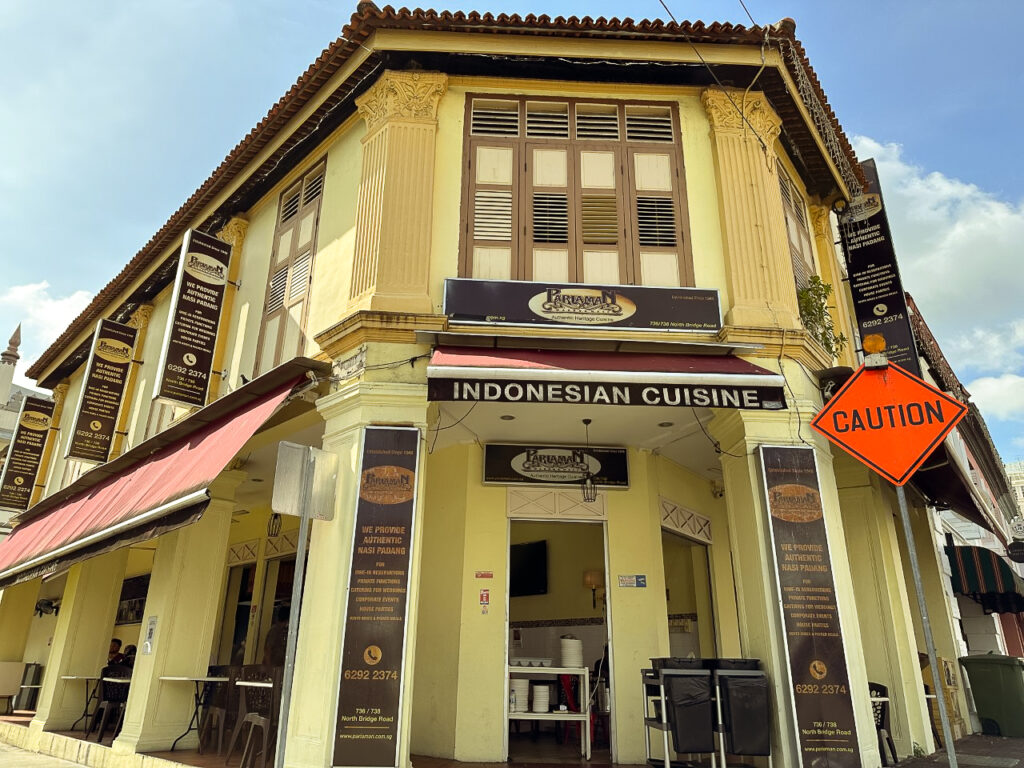
A Nasi Padang stall that prides itself on still cooking Beef Rendang on top of a charcoal fire, Warong Nasi Pariaman is no stranger to the Singapore community. Established in 1948, approximately 20 years before Singapore’s independence, Warong Nasi Pariaman is the oldest surviving stall that serves Nasi Padang – rice with mixed dishes, according to the National Library Board.
The family-run business was founded by an Indonesian couple, Isrin Bin Ibrahim and his wife, Rosna Binte Zainal Abidin who migrated to Singapore in the 1940s and started their small Nasi Padang business at a small street stall before moving into the now still-standing shophouse at Kandahar Street. Now, the business has been handed over to the second-generation owner, Mr Jumrin Isrin.
The stall was named after the founders’ hometown of Pariaman, a small province in Padang, west of Sumatra. Pariaman cuisine is known for its dishes rich in coconut milk such as Beef Rendang and grilled chicken drenched with a coconut milk sauce. What differentiates Warong Pariaman from other Nasi Padang stalls in Singapore is their authentic family recipes which have been passed down for over 7 decades. They also still preserve cooking techniques such as grilling chicken and simmering their Beef Rendang over charcoal using an old-school cement stove called the “ang lo” which can never be seen in normal HDB kitchens. “Cooking with gas is nothing like cooking with charcoal. The heat from the charcoal unites and adds to the flavour of the dish. Nothing can beat the flavour of dishes cooked under a charcoal flame,” said Mr Jumrin, 62, the current owner of Warong Pariaman.
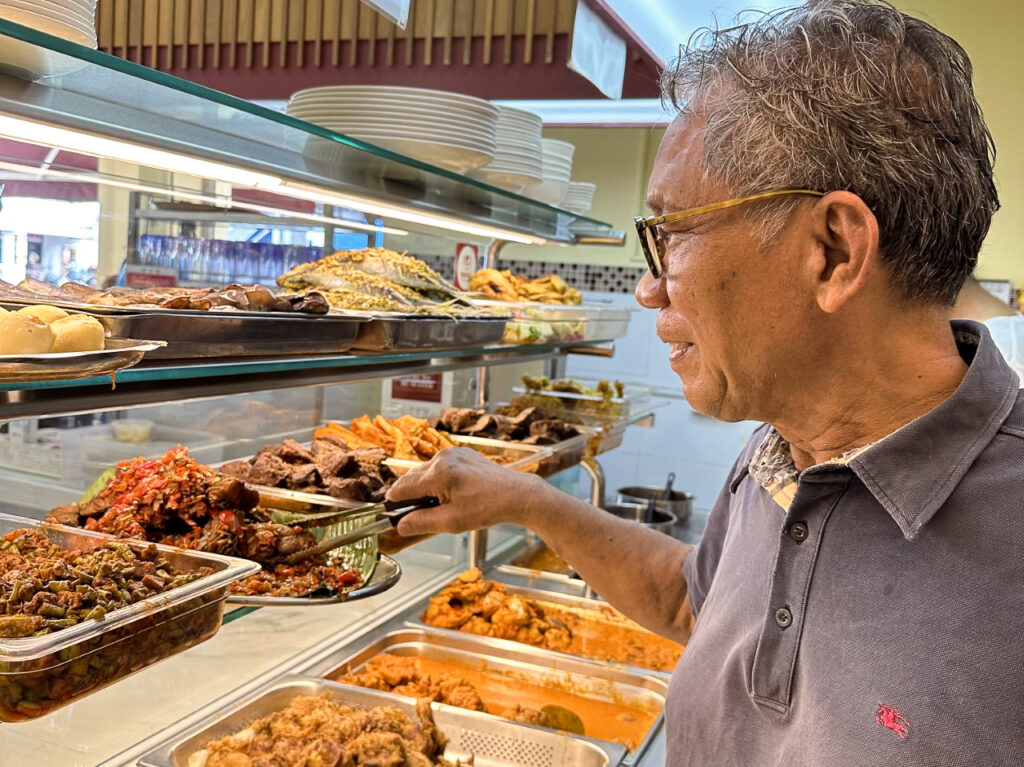
When asked the reason why the family decided to preserve the authenticity of the dishes by not neglecting the cooking techniques, Mr Jumrin simply said, “if we keep on changing the way we cook these dishes, bit by bit the originality will disappear as time goes by and we don’t want that to happen.” He went on to explain how difficult it is to preserve the Minangkabau culture, especially in a fast-paced modern country like Singapore. “My parents migrated to Singapore and brought the Minangkabau culture here. It is hard to preserve every aspect of my family culture like the traditional attire and the festivities because we do not originate from here. So one way to educate Singaporeans about the Minangkabau culture is through food. Just like what Warong Pariaman has been doing since 1948.”
Mr Jumrin decided to continue his family business not only because he wanted to preserve the unique Minangkabau cuisine, but he also saw the blood, sweat and tears that his parents went through to make sure that their business stayed afloat throughout the 75 years they have been in operation. He recounted the times when people were envious of his family’s successful business and tried to tear them down. However, due to the strong family bond that they have, they managed to overcome those obstacles. He also said that he enjoys preparing food for customers and putting smiles on their faces when their stomachs are filled with palate-stimulating food.
Madam Azimah Ali, 58, is a loyal customer of Warong Pariaman. She frequents the place with her family. Although she stays on the North side of Singapore, she still travels to Kandahar Street to enjoy Warong Pariaman’s Nasi Padang. Every time she eats there, she will never miss the tender, yet moist Beef Rendang which is infused with the flavours of the rempah – the marinade. Another dish that she loves is the grilled chicken cooked in fragrant yellow coconut gravy that falls off the bone right when she takes the first bite. “Warong Pariaman was a place where I dated my husband when we were young and the taste of the dishes never changed. The food here is as delicious as I remembered the first time I ate here.” exclaimed Madam Azimah while she indulged in the food there.

Customers like Madam Azimah are forces that drive Mr Jumrin to continue the family’s legacy. He learnt a lot while managing and running his family stall. One of the takeaways that he emphasised was the importance of building a strong foundation with his family members. Having a solid bond with family members who he is doing business with made him learn how to be professional and not to meddle with personal family matters once they step into work.
It is interesting how the Minangkabau cuisine from Indonesia can stay relevant and strong for decades in Singapore. Although there are worries that the future generation might not be interested in continuing the Pariaman legacy, perhaps efforts from organisations like The National Heritage Board can ensure that this authentic heritage cuisine will not fade away.