

Written by: Ong Natalie, Terence Sim, Gabriel Ramsey & Bashirah Uzma
In Singapore, 2.42 million of the 5.45 million residents – or more than 44 per cent of the population – in 2021 are Chinese. However, even amongst the Chinese, there are many different dialect groups such as Hokkien, Cantonese, Hainanese and Hakkas. The origins of the various dialects link back to early Chinese settlers in Singapore, who mostly came from southern China to earn a fortune and ended up settling here.
Here is a list of some of the Chinese cuisine brought to Singapore by our forefathers that has evolved over the years.
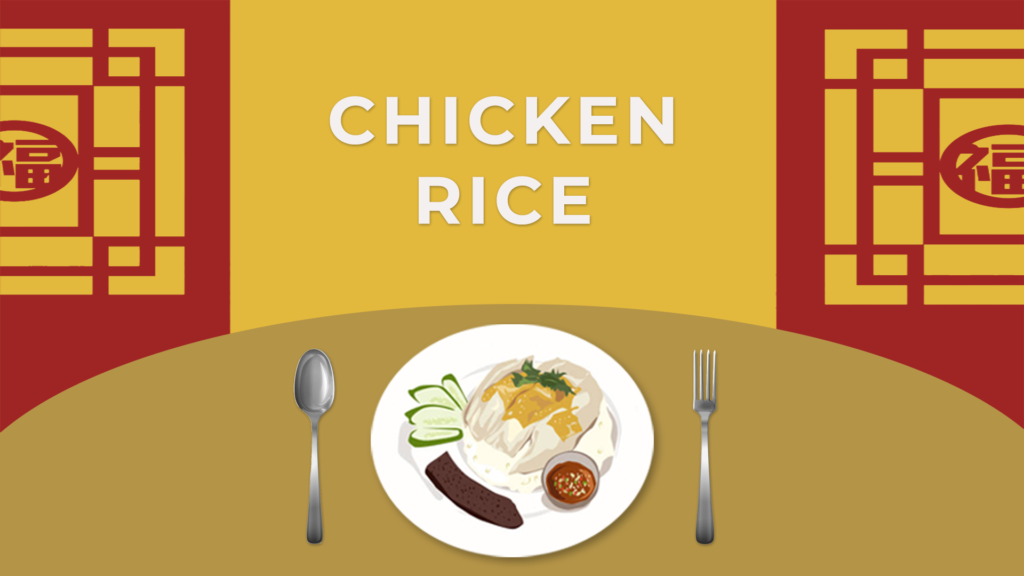
Hainanese Chicken Rice
Hainanese Chicken Rice is one of Singapore’s most beloved local dishes, consisting of succulent portions of steamed chicken served over rice with a savoury fragrance that any Singaporean can instantly recognise.
The iconic aroma of Hainanese Chicken Rice can be traced back to its intricate preparation, involving the pre-frying of rice grains in chicken fat and subsequently its cooking process in chicken broth. The rice is then glazed in oil and coupled with the traditionally-used Wenchang chicken, leading to an array of infused flavours catering to your palate.
First originating from the province of Hainan in China, the renowned dish made its way to Singapore through Hainanese immigrants in the 19th century, who had opened chicken rice restaurants for a new source of income. This allowed the dish to inherit Singaporean influences like adding pandan leaves to the rice to bring out more flavour, as well as some Cantonese influences such as chilling the chicken after cooking for an extra gelatinous texture.
Hainanese Chicken Rice is a simple dish with numerous variations in its ingredients and preparation methods. This versatility contributes to the fact that the dish can be enjoyed by the likes of any ethnic community in Singapore. Ubiquitously found in almost every Singaporean eatery, it is considered one of our national dishes and has captured the hearts of locals and foreigners alike.
More popular restaurants such as Wee Nam Kee or Tian Tian Hainanese Chicken Rice have proven to attract great crowds of people for the simple dish. However, just about any eatery selling, this delicacy should satisfy your appetite! At prices as low as $3 for a single plate, this dish is definitely worth your time and money
Stories & Co. Recommends: Tian Tian Chicken Rice
Tian Tian Chicken Rice provides tender and flavourful chicken designed to beautifully compliment the chilli and soy sauce that comes along with the dish. However, even with such great praise for their chicken, Tian Tian Chicken Rice makes rice that far surpasses even their chickens! Being cooked in chicken broth, it produces a bowl of fragrant rice that fully brings out the full potential of this traditional dish. With convenient locations across Singapore being located in Bedok, Maxwell Food Centre and Clementi, and going for an average price of $5, what’s there not to love about Tian Tian Chicken Rice?
Not only that, but Tian Tian Chicken Rice has also bested world-renowned chef, Gordon Ramsay, in the ‘Hawker Heroes Challenge’ organised by SingTel. Ramsay at the time was a holder of 3 Michelin Stars.
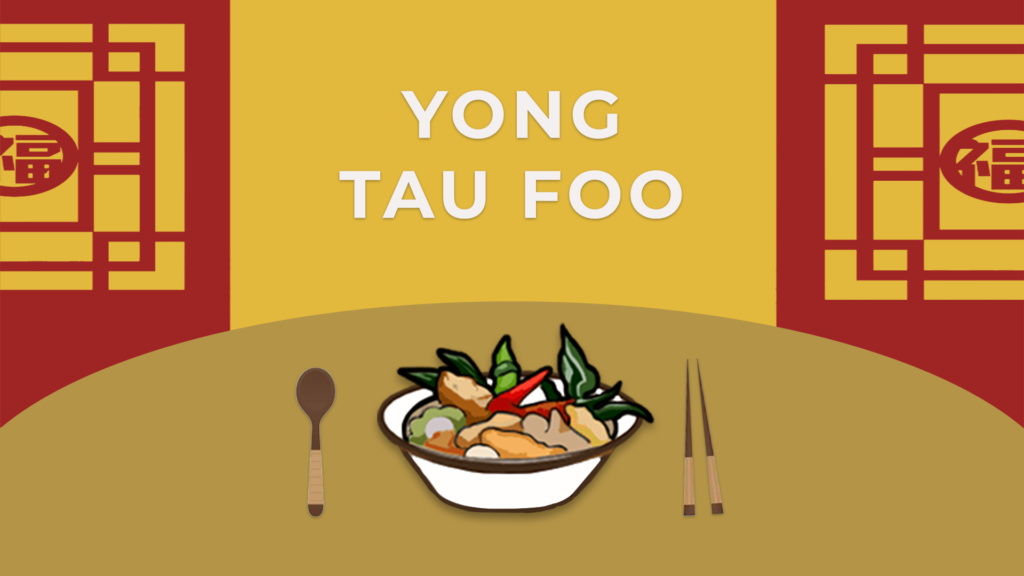
Yong Tau Foo (Hakka)
Yong Tau Foo, meaning stuffed tofu, is one of Singapore’s local Hakka Chinese foods. Hakkas lived in southern China, however, due to the Taiping Rebellion in 1850, many Hakkas migrated to neighbouring countries including Malaysia and Singapore. Yong Tau Foo is a dish consisting primarily of tofu filled with ground meat mixture or fish paste. Another variation of this food includes vegetables and mushrooms stuffed with ground meat or surimi. Yong Tau Foo is eaten in numerous ways, either dry with a sauce or served as a soup dish. It can be found in parts of China, Indonesia, Malaysia, Singapore, Thailand, Vietnam and in cities with large Hakka populations.
The reason that Yong Tau Foo first came about was when the Hakkas were unable to get ahold of wheat flour to make dumplings, an essential during festivals such as Chinese New Year, which resulted in them substituting it with tofu.
In Singapore, Yong Tau Foo can be served either with soup or sweet bean sauce. Ingredients that go into making Yong Tau Foo are varied, with common stuffing in Singapore being ingredients such as bitter gourd, eggplants and chilli peppers being stuffed alongside fish paste or minced meat. The sweet sauce made with ingredients such as ginger, oyster sauce and sesame oil only further enhances the taste.
Found in nearly every hawker centre, Yong Tau Foo is a delicacy that people of all ages can like, the most famous stalls being Tiong Bahru Yong Tau Hu at Eng Hoon Road and Ampang Niang Tou Fu at East Coast Road.
Stories & Co. Recommends: Seng Heng Family Restaurant
A heartlands stall located at Yishun Central provides not only delicious Yong Tau Foo but a unique experience with the dish as well. With a low starting price set of $3, it is also incredibly affordable. Not only that, Seng Heng Family Restaurant also serves Yong Tau Foo in a special Laksa broth that can spice up your already flavourful meal.
Another recommendation is to order Yong Tau Foo earlier in the day, this helps ensure the freshness of the ingredients which will help optimise the taste.
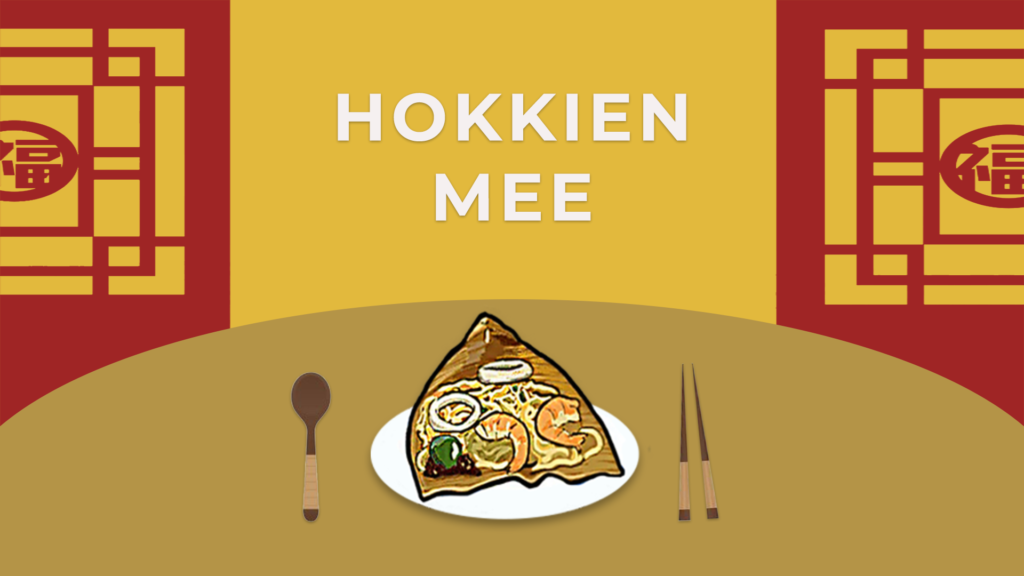
Hokkien Mee
Hokkien Mee is one of Singapore’s local Hokkien foods, consisting of egg noodles or rice noodles, egg, prawn, squid, fish cake and pork, often with lard, limes and sambal on the side.
This dish is made with an abundance of aromatic broth made from prawns and pork bones, slowly simmered for several hours. Sambal chilli and calamansi limes are added to give the dish an extra zing and tanginess. Traditionally, small cubes of fried lard are added, and some stalls also serve the dish on an opeh leaf, which enhances its fragrance.
Hokkien mee was created after WWII by Chinese sailors from Fujian (Hokkien) province in southern China. After working in the factories, they would gather at Rochor Road and fry excess noodles from the noodle factories over a charcoal stove. Additionally, Hokkien Mee is also famous in Malaysia, especially in Penang and Kuala Lumpur.
Found in nearly every hawker centre for a cheap price of $5 to $8, Hokkien Mee has become a local favourite, especially with the pioneering generation – the most notable stalls being Ah Hock Fried Hokkien Mee at Chomp Chomp Food Centre and Geylang Lorong 29 Fried Hokkien Mee, located at East Coast Road.
Stories & Co. Recommends: Hokkien Man Hokkien Mee
Ever wonder how our traditional dishes would taste if we incorporated Western-style cooking while preparing them? Look no further than Hokkien Man Hokkien Mee, a hawker stall located in Toa Payoh run by a former sous chef who worked at Les Amis, a french restaurant with three Michelin stars. Combining yellow noodles and bee hoon, along with a seafood-flavoured stock that enhances the taste, Hokkien Man Hokkien Mee is sure to please. Do take note of the early closing time, with their operations running from just 10 am to 2 pm.
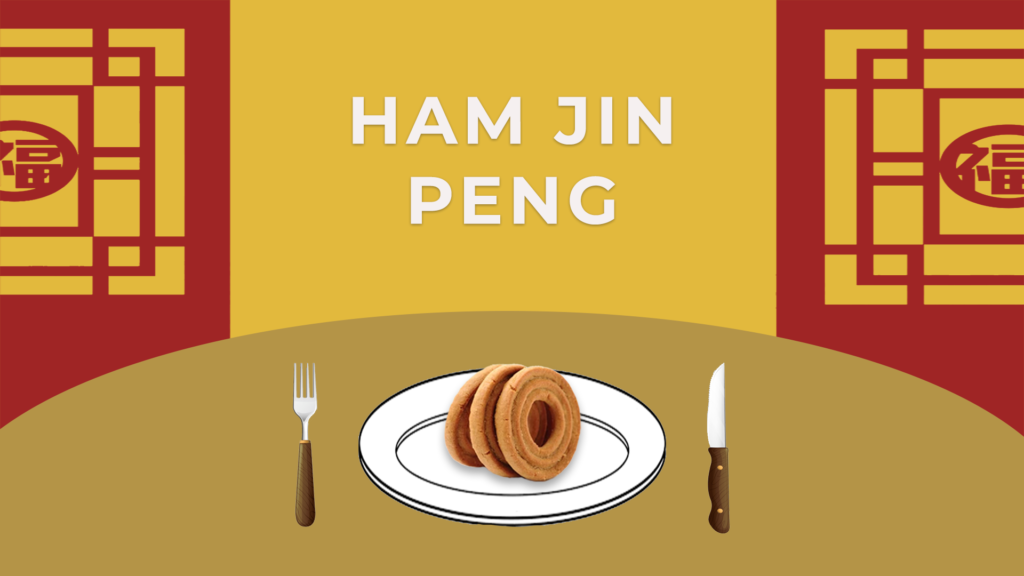
Chinese fried doughnuts (Ham Jin Peng) (Cantonese)
Chinese fried doughnuts (also known as ham jin peng in Cantonese) is one of Singapore’s local Cantonese foods, consisting of flour and sesame seeds. This doughnut is unlike the typical doughnut you are familiar with, with a deep-fried hollow centre shaped not as a circle but as a stick. It has three different fillings of glutinous rice, five spice powders and red bean paste.
With a price range of 60 cents to a dollar, this breakfast item is a common sight at almost every hawker centre. These stalls usually sell other Chinese breakfast items such as ‘youtiao’ and butterfly bun, two other deep-fried food items. Crispy on the outside and hollow on the inside, give this savoury dish a fantastic texture.
Stories & Co. Recommends: Hum Jin Peng (Maxwell Food Centre)
At Maxwell Food Centre, Hum Jin Peng offers a low price of just $1 for six doughnuts, a really cheap deal for all who are fans of these dishes. Fried until it becomes a crispy golden brown, along with being delicately seasoned with five-spice powder, it is perfect for all those who are craving a savoury meal. And best of all – you can have a go at frying them yourself! With a long-running tradition of people helping fry the dough on busy days, the tradition has evolved into allowing customers to create their very own Ham Jin Peng!
With Singapore being a nation with a population being majority Chinese, many can take for granted the culture of the Chinese population and lump the very diverse and unique history into one. However, with this article, we hope that you can better appreciate the cultures of the different dialects here in Singapore as well as try the delicious foods that each dialect offers.