
Did you know that 14% of the Singapore population has experienced a mental disorder in their lifetime? Despite this, more than 75% of them ignored their condition, and did not seek medical attention.
According to the World Health Organisation (WHO), mental health affects an individual’s state of mind as they realise their inability to deal with day to day tasks effectively. With over 28 different types of mental illnesses, an individual’s mind faces disturbances in their thought processes. Some common mental disorders are depression, anxiety and schizophrenia. Not only do these affect individuals, but also their family and friends.
According to the Samaritans of Singapore (SOS), 71 youths have committed suicide in 2019. SOS also noted that this number of suicides have remained the highest amongst the different age groups, especially for youths aged 10 to 29.
In a study conducted in 2019 by the Singapore Mental Health Study, 1 in 5 youths aged 18 to 34 have suffered from a mental disorder in their life. This presents youths to be the most vulnerable to mental illness.
With the respondents being hesitant in reaching out for mental health, an average gap of 11 years was recorded. Mental health is still considered as a taboo in today’s society. Due to the delay in seeking help, the individuals experience their conditions worsening into obsessive compulsive disorders.
Fortunately, the Ministry of Health has recorded an average of 12,600 individuals ranging from the age of 15 to 34 that reached out for treatment at public hospitals from the years 2017 to 2019.
In order to help people tackle mental well-being, the Integrated Youth Service launched in 2020. This new initiative was a joined effort of the Ministry of Health (MOH), Institute of Mental Health (IMH), Agency for Integrated Care and Care Corner, “a one-stop service where at-risk youths can access coordinated mental health and support services such as individualised basic emotional support, needs identification and befriending services” as described by MOH in a press release.
Desmond Lee, Minister for Social and Family Development added that the “Integrated Youth Service unites the diverse perspectives and views of people who want to improve the youths’ mental well-being as they reach out to the government” on a Facebook post on February 27 last year.
The Mental Health Support Services is a new incorporation which guides youths to find the best solution among a variety of options. Medication and psychotherapy are two common ways to manage mental health illness. Medication and psychotherapy are two common methods of managing mental illness, but have varying effects from patient to patient.
Senior Minister of State for Health, Dr Lam Pin Min, mentioned that youths’ “mental well-being continues to be a top concern”, suggesting that further actions are required. In the Ministry of Health Budget Debate 2020, Dr Amy Khor, then-Minister of State for Health, mentioned that the government ensures sufficient financial support frequently for Mental Health.
Second Minister for Education, Indranee Rajah, mentioned “One key challenge our youths face today is mental well-being”. With this in mind, the Ministry of Health revisited the curriculum for Character and Citizenship Education (CCE).
The new CCE curriculum aims to focus on mental wellness and peer support. The revised module plans “to help students to understand common mental health issues and their symptoms, know when and how to seek help for themselves and others, and develop empathy and care towards persons with mental health issues”, said Ms Indranee.
In conjunction with the Health Promotion Board, polytechnics and the Institute for Technical Education (ITE) introduced mental health resources for students.
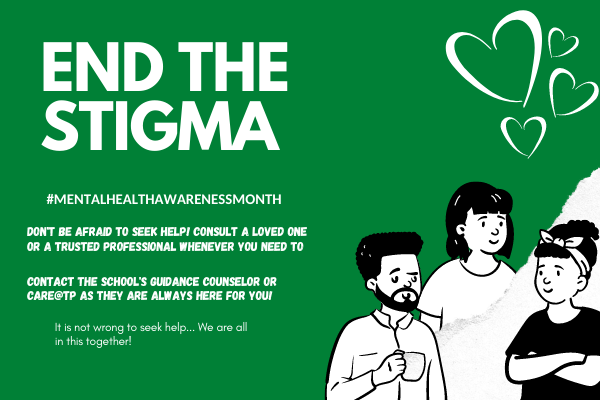
However, the Government can only provide help when individuals recognise their need to seek professional help. At the initial stage, family and friends can help recognise youths who may suffer from mental illness by encouraging them to seek medical attention and support throughout their road to recovery.
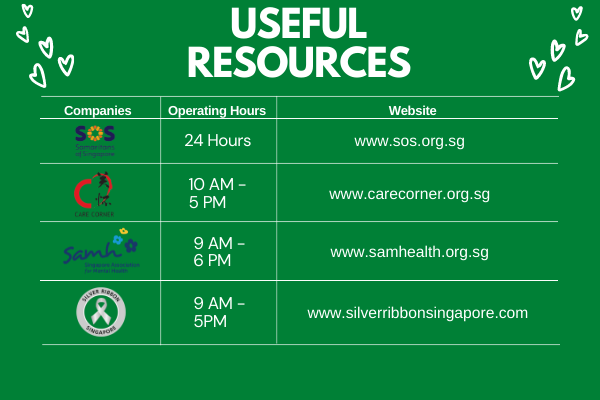
If someone you know is at immediate risk, you can call any one of the hotlines provided below for assistance.