By Muhd Danial Irfan & Chloe Delgado
John Green once said: “There is hope, even when your brain tells you there isn’t.” It’s critical to be aware of something that many people struggle with on a regular basis. In lieu of Mental Health Awareness month, we will be discussing the struggles that the youths of today face during their transition to home-based learning due to the pandemic.
COVID-19 has left an impact on everyone’s lives, including the youths of Singapore. With the circuit breaker measures implemented, students have had to cope with the disruption to their normal lives, which have brought feelings of stress and anxiety to many. COVID-19 not only impacted the youths physically, but mentally as well.
In April 2020, the government implemented the ‘Circuit breaker’ in a bid to curb the increase in COVID-19 cases in Singapore.
“We have decided that instead of tightening incrementally over the next few weeks, we should make a decisive move now, to pre-empt escalating infections,” said PM Lee Hsien Loong then.
A three-week lockdown was implemented on April 7: businesses, workplaces, attractions and schools were closed during the duration of the circuit breaker.
Without a doubt, the increasing number of cases daily has taken a toll on citizens’ lives, including the youths. Students across all levels, from primary school to universities, including those in special education schools, shifted to full home-based learning (HBL) from Apr 8 to May 4. Home-based learning became the new norm for students. Instead of face-to-face classroom lessons, lessons were conducted online. Teachers continued to give ongoing support by providing students with access to both online and hard copy home-based learning materials, in making sure that learning continues to take place.
The transition from face-to-face lesson to home-based learning was quite a challenge for some. Having to learn remotely through digital tools and not having physical access to education has been challenging. Not every student has access to a computer or devices to help them in their online lessons.
Despite the support provided, many youths were affected mentally during the circuit breaker. This is especially true for new students starting at polytechnics and Institutes of Technical Education. These youths had to make do with what they have, instead of the usual face-to-face lectures, they were expected to learn independently from home and were only allowed to go to school in small groups if necessary.
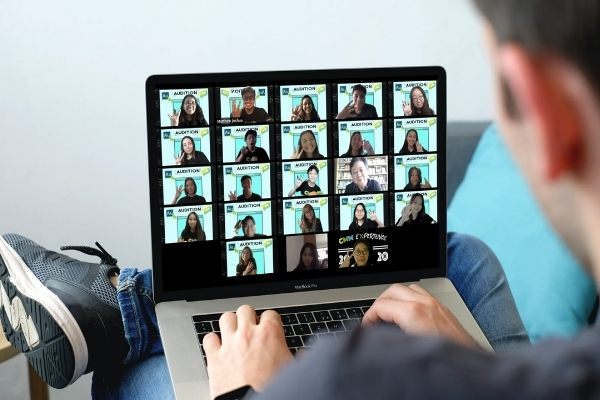
Such drastic changes in their routines have caused youths to feel stressful and anxious. Muhammad Ishardy, a student in Institution of Technical Education (ITE) College East, shared that he preferred face-to-face lessons as it was easier for him to focus in a physical classroom. He said: “At home, there are a lot of distractions such as my phone and my bed. This did not make me focus in my classes, whereas in school, there is a teacher to supervise and fewer distractions.”
Ishardy also shared that his mental health had gotten worse during the circuit breaker period. He found it harder to communicate with his teachers online, as he had to wait for their replies when clarifying his doubts, making him slower in completing his work. This made him feel stressed with school work.
Nur Umairah, a professional football player playing for Temasek Polytechnic (TP), said that the pandemic had affected her mental health state greatly. As someone who loves sports, she found it rather difficult to train at home. She said: “It was difficult to train and to coordinate with the rest, keeping in mind that we can’t train together as a team.” She also mentioned that she felt a sense of demoralisation as she perceives that she lacked behind in her skills.
Unfortunately, Umairah is not the only one who feels like this. Chelsea Koo, a student in TP, said it was harder to learn new things online, especially since she was in her first year of polytechnic. She said: “I found it difficult to learn Photoshop through Microsoft Teams.” She also mentioned that it was difficult to communicate and clarify her doubts about the software to her teacher.
However, both Umairah and Koo found the good in having lessons through home-based learning. They enjoyed the extra time they could have used travelling to and from school by using it to do things that they liked, such as watching shows and spending quality time with their families and loved ones.
Having used the different online platforms also shined a positive light on the pandemic. Umairah said, “Even though we had to avoid physical meetups, platforms such as Microsoft Teams and Zoom gave us the opportunity to organise a virtual meet up to check in with our loved ones.”